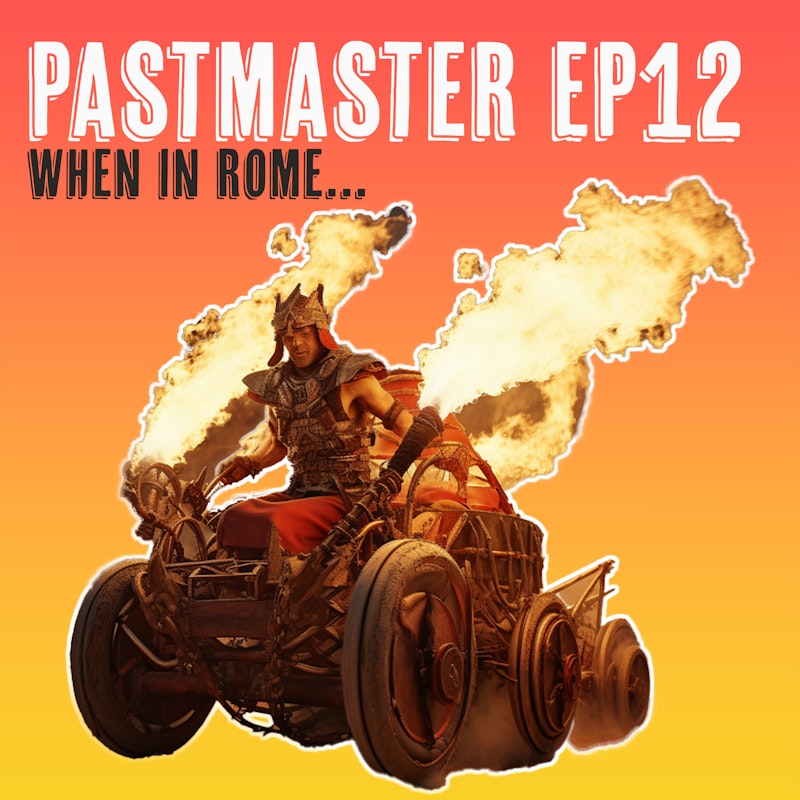
Super-Gladiator-Chariots of Fire: Dominating the Roman Arena
Roma • Italy • 70 BCE
Watch
Republican Rome, 70 BCE. The Circus Maximus is packed, the crowd is baying for blood, and Tan's just arrived with plans to pimp his chariot using 21st-century engineering know-how. Channelling his inner Premiership footballer, he struts into the arena and starts baiting the crowd before the race has even begun.
Tan's strategy for Roman chariot racing: upgrade the ancient design with modern automotive principles, trash-talk 250,000 spectators, and channel a level of sporting arrogance that won't be seen again for another two thousand years. The engineering knowledge comes from Top Gear rather than mechanical physics. The confidence comes from somewhere else entirely. Whether ancient Rome is ready for this particular brand of showmanship is the question the Circus Maximus is about to answer.
Roman chariot racing was the most popular spectator sport in the ancient world, faster, bloodier, and more politically charged than gladiatorial combat. The Circus Maximus could hold a quarter of a million spectators, and the factions commanded fanatical loyalty. Successful charioteers became the ancient equivalent of Premier League footballers: rich, famous, and surrounded by people who wanted to kill them. Tan's decision to antagonise the crowd before the wheels have even started turning is either incredibly brave or incredibly stupid. Possibly both.